Introduction
In heavy equipment, power is never just about engine size. Excavators, loaders, bulldozers, tractors, mining vehicles, cranes, forklifts, and other construction machines all depend on controlled power transfer. Every time a machine starts moving, changes speed, turns under load, brakes on a slope, or engages a working attachment, the drivetrain must manage torque smoothly and safely. One important component inside that system is the wet friction plate.
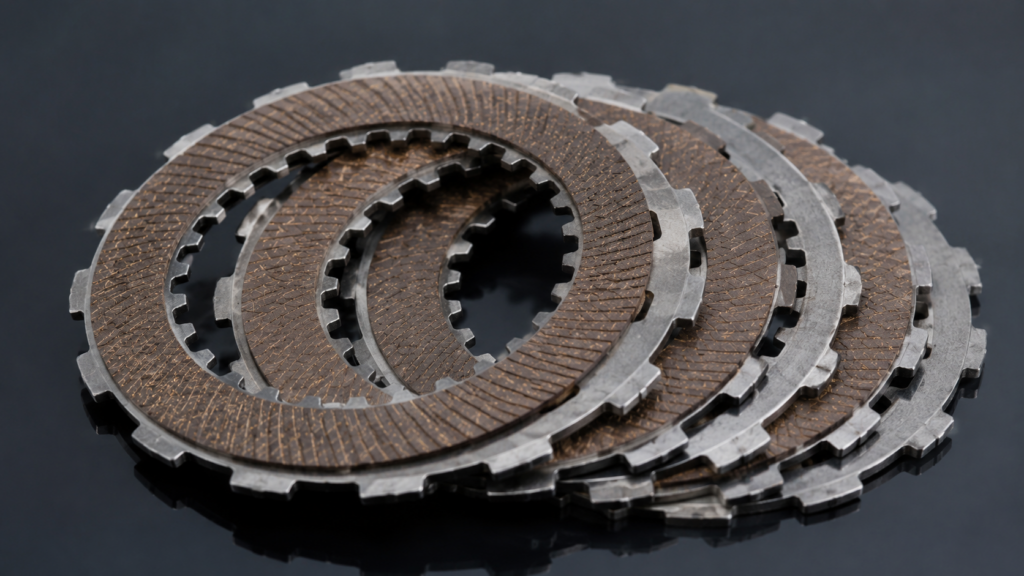
A wet friction plate is a friction component designed to work in oil. Unlike dry friction components that operate in open air, wet friction plates are immersed in transmission oil, hydraulic oil, or dedicated lubricating fluid. This oil helps cool the friction surface, reduce wear, remove heat, carry away debris, and support smoother engagement. Because engineering machinery often works under heavy load, frequent start-stop cycles, high torque, and dusty outdoor conditions, wet friction plates are widely used in clutches, brakes, steering systems, powershift transmissions, winches, and axle systems.
For buyers, repair shops, equipment manufacturers, and maintenance teams, understanding wet friction plates is not just a technical topic. It directly affects machine safety, operating cost, downtime, replacement frequency, and long-term performance. This article explains what wet friction plates are, how they work, why they matter in engineering machinery, and which application scenarios require reliable wet friction material. Companies such as goodafriction focus on these friction solutions because the quality of the plate often determines how stable and durable the whole transmission or braking system can be.
What Is a Wet Friction Plate?
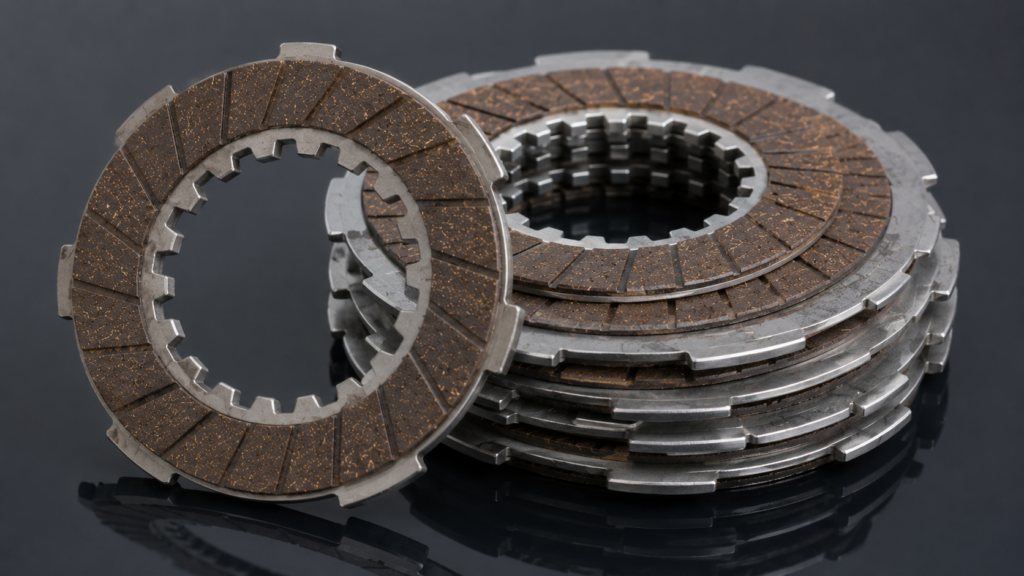
A wet friction plate is a disc-shaped component used to transmit or stop rotational force through friction while operating inside oil. It usually works together with steel plates, separator plates, pressure plates, pistons, springs, and hydraulic control systems. When pressure is applied, the wet friction plate contacts the mating steel plate. This contact creates friction, allowing torque to be transferred, motion to be controlled, or rotational speed to be reduced.
Wet friction plates are commonly found in wet clutches and wet brakes. In a wet clutch, the plates engage to transfer power from one rotating part to another. In a wet brake, the plates create controlled resistance to slow down or hold a machine. Many wet systems use multiple discs stacked together, which increases friction surface area without requiring one oversized plate.
The Meaning of “Wet”
The word “wet” means that the friction pair works in oil or lubricating fluid. This does not mean the system has low friction. Instead, the oil becomes part of the friction system. It helps control temperature, lubrication, surface protection, and engagement feel. In many wet clutch and brake designs, grooves or channels on the friction surface help oil flow across the plate, improving cooling and reducing unwanted drag. Wet friction systems often depend on the combined performance of friction material, steel mating surface, oil flow, groove pattern, pressure, speed, and temperature.
Basic Structure
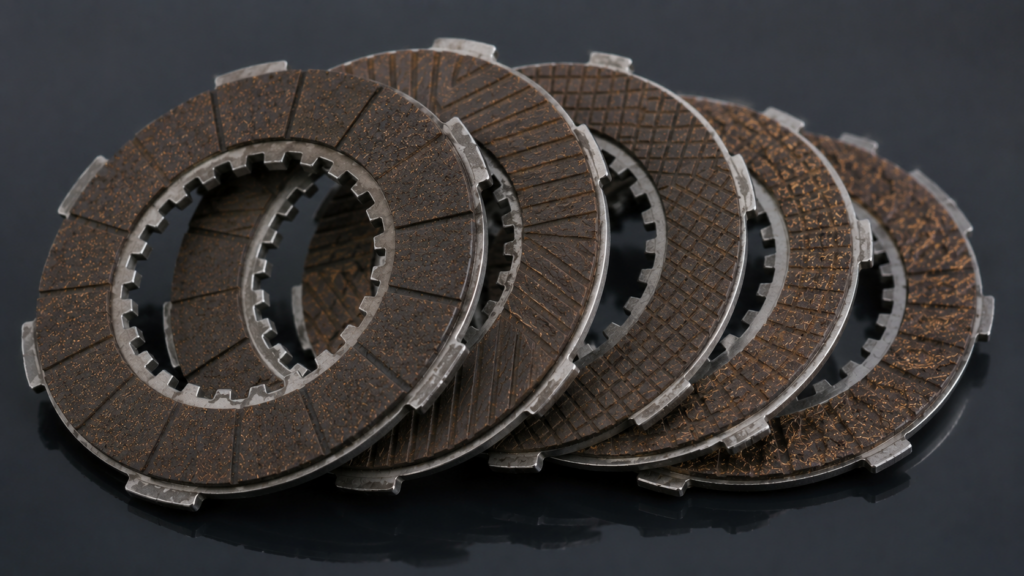
A typical wet friction plate includes a steel core and friction material bonded to one or both sides. The steel core provides strength and dimensional stability. The friction material provides the working surface that contacts the steel mating plate. Depending on the application, the friction material may be paper-based, carbon-based, graphite-based, sintered bronze, sintered iron, organic composite, or other engineered material.
The surface is often designed with grooves, slots, or oil channels. These patterns help guide oil movement, reduce overheating, stabilize friction, and improve engagement. The exact groove design can affect oil discharge, drag torque, noise, vibration, and cooling performance.
How Wet Friction Plates Work
A wet friction plate works by converting pressure into controlled friction. When the machine needs to engage a clutch or brake, hydraulic pressure or mechanical force pushes the friction plates and steel plates together. The friction material grips the mating surface through the oil film. As pressure increases, the torque capacity increases.
Engagement
During engagement, the plates move from a slipping condition to a locked or near-locked condition. This transition must be smooth. If the friction coefficient is unstable, the machine may jerk, vibrate, chatter, or produce noise. In heavy equipment, unstable engagement can make operation less precise and may damage drivetrain components.
Heat Control
Friction creates heat. In heavy machinery, this heat can be significant because the machine may operate under high load, low speed, or repeated braking cycles. Oil helps absorb and carry heat away from the friction surface. This is one of the biggest advantages of wet friction systems. Compared with many dry systems, wet systems can often handle repeated engagements more smoothly because the oil provides cooling and lubrication.
Torque Transfer
The ability of a wet friction plate to transfer torque depends on several factors: friction material, contact area, plate diameter, number of plates, applied pressure, oil type, surface finish, and operating temperature. A larger friction area or a multi-disc design can increase torque capacity while keeping the system compact.
Why Wet Friction Plates Matter in Engineering Machinery
Engineering machinery works in conditions that are much harsher than normal road vehicles. Heavy machines often operate on uneven ground, carry large loads, move slowly under high torque, and experience repeated directional changes. Wet friction plates help these machines perform safely and consistently.
Smooth Power Delivery
Machines such as loaders, graders, forklifts, tractors, and bulldozers need smooth power delivery. Sudden power transfer can damage gears, axles, shafts, hydraulic components, and attachments. Wet friction plates allow controlled slip during engagement, helping the machine start smoothly and change operating states without shock.
Better Heat Resistance
Heavy equipment can generate intense heat during braking, clutching, or steering. Oil cooling helps wet friction plates manage this heat. High-quality friction materials also resist thermal degradation, glazing, and excessive wear. Heat stability is especially important in mining equipment, construction machinery, agricultural machines, and off-road vehicles, where wet clutch and wet brake systems are common.
Reduced Wear
Because the friction surface operates in oil, wear can be controlled more effectively than in many dry environments. Oil reduces direct surface damage, removes particles, and helps maintain more stable contact conditions. However, wet friction plates still wear over time. Poor oil quality, incorrect fluid type, overheating, contamination, and overload can shorten their service life.
Compact Design
Wet multi-disc systems can deliver high torque in limited space. This is valuable in transmissions, axle brakes, steering clutches, and compact drivetrain assemblies. Instead of using one large brake or clutch surface, engineers can stack multiple friction and steel plates inside a smaller housing.
Main Functions in Heavy Equipment
Wet friction plates perform several important functions across engineering machinery. Their role changes depending on where they are installed.
Power Transmission
In powershift transmissions and wet clutches, friction plates connect and disconnect power between shafts. This allows the machine to change gears, reverse direction, or engage drive power without stopping the engine. Smooth power transmission improves operator comfort and reduces shock loads.
Braking
Wet brake systems use friction plates to slow down or hold the machine. Because the plates operate in oil, wet brakes are protected from mud, dust, water, and external contamination. This makes them suitable for wheel loaders, forklifts, mining trucks, tractors, and construction vehicles.
Steering Control
Some tracked machines use wet steering clutches or brake systems to control turning. By engaging or disengaging friction elements on one side, the machine can turn more smoothly. This is important for bulldozers, crawler tractors, and other tracked equipment.
Load Holding
In winches, hoists, cranes, and industrial drive systems, wet friction plates can help hold or control heavy loads. Stable friction is essential because uncontrolled slipping can create safety risks and mechanical damage.
Common Application Scenarios
Wet friction plates are used wherever machines need high torque, controlled motion, compact braking, and durability in harsh conditions.
Construction Machinery
Excavators, wheel loaders, bulldozers, compactors, graders, and backhoe loaders use friction components in transmissions, brakes, axles, and steering systems. These machines often operate at low speed under high load, which creates heat and stress. Wet friction plates help manage these conditions.
Agricultural Equipment
Tractors, harvesters, balers, and other agricultural machines need reliable clutch and brake systems. They work in dirt, moisture, crop residue, and changing terrain. Wet systems help protect friction components from external contamination and support smoother engagement during field operation.
Mining Equipment
Mining vehicles and underground equipment face heavy loads, long duty cycles, and demanding braking conditions. Wet friction plates are suitable for these environments because they can work inside sealed systems and handle repeated high-energy use when designed correctly.
Forklifts and Material Handling Machines
Forklifts require precise movement in tight spaces. Wet brakes and wet clutches help provide smooth stopping, controlled acceleration, and durability in warehouses, factories, ports, and logistics centers.
Marine and Industrial Drives
Wet clutch and brake systems are also used in marine transmissions, winches, industrial gearboxes, and special equipment. In these systems, friction plates must deliver stable torque while resisting heat and wear.
Wet Friction Plate Materials
The material choice determines how the plate performs under pressure, heat, speed, and oil conditions. There is no single best material for every machine. The right material depends on the application.
Paper-Based Friction Material
Paper-based wet friction material is widely used in automatic transmissions, wet clutches, and wet brakes. Although it is called “paper,” it is actually an engineered composite made with fibers, fillers, resins, and additives. It can provide stable friction, good oil absorption, and smooth engagement.
Carbon-Based Material
Carbon friction materials are used where high heat resistance, stable friction, and long life are important. Carbon materials can offer strong thermal performance and consistent behavior under demanding operating conditions.
Graphite-Based Material
Graphite materials are valued for thermal stability, wear resistance, and oil compatibility. Some graphite wet friction materials are designed with controlled porosity, which helps oil retention and heat dissipation.
Sintered Bronze and Sintered Iron
Sintered metallic materials are often used for high-energy applications. Sintered bronze may provide good wear resistance and heat handling, while sintered iron can be selected for tougher operating environments. These materials are common in heavy-duty wet brake and clutch systems.
Steel Mating Plates
The steel plate is not just a passive part. Its surface finish, hardness, flatness, and roughness directly affect friction behavior. Research on wet clutch systems has shown that the steel mating surface can influence friction performance in different operating modes, including braking shifts and microslip conditions.
Key Performance Requirements
A wet friction plate must meet several performance requirements to work well in engineering machinery.
Stable Friction Coefficient
The friction coefficient should remain stable across different temperatures, speeds, pressures, and oil conditions. If friction changes too much, the clutch or brake may become harsh, weak, noisy, or unpredictable. Studies on wet clutches show that friction coefficient can change over service life, which is why material durability and maintenance are important.
Heat Resistance
Wet friction plates must resist thermal damage. Excessive heat can cause material degradation, surface glazing, bonding failure, oil breakdown, and reduced torque capacity.
Wear Resistance
Long service life reduces maintenance cost and machine downtime. Wear resistance depends on friction material, oil cleanliness, operating load, cooling, and system design.
Oil Compatibility
The friction material must be compatible with the oil used in the machine. The wrong oil can change friction behavior, reduce braking performance, cause clutch shudder, or accelerate wear.
Bonding Strength
If the friction material is bonded to a steel core, the bond must resist heat, oil, pressure, and shear force. Poor bonding can lead to delamination and failure.
Wet Friction Plates vs. Dry Friction Plates
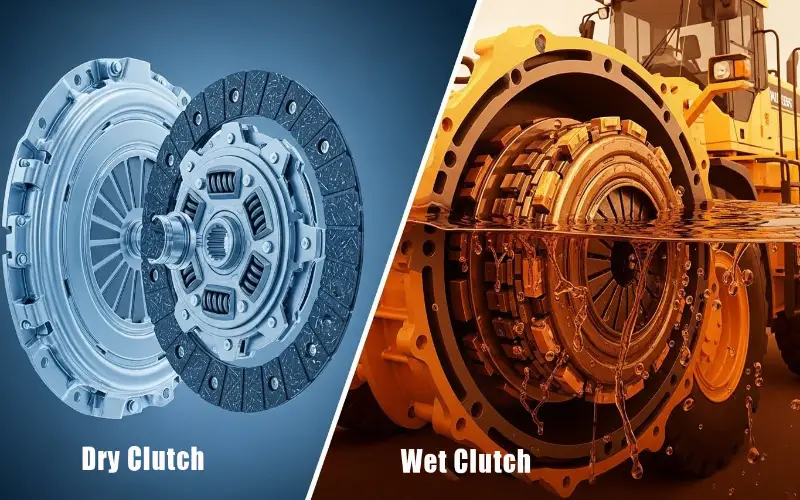
Wet and dry friction plates both use friction to control motion, but they are designed for different environments.
Cooling
Wet plates use oil for cooling, while dry plates rely more on air and surrounding structure. For heavy-duty repeated engagement, wet systems often provide better heat control.
Contamination Protection
Wet systems are usually sealed, which helps protect the friction components from dust, mud, and water. Dry systems may be more exposed depending on the design.
Engagement Feel
Wet friction systems can provide smoother engagement because the oil film helps moderate contact. Dry systems may provide stronger direct bite but can be harsher in some applications.
Maintenance
Wet systems require clean and correct oil. Dry systems may not require oil management, but they can be more affected by dust, heat, and surface glazing.
Common Failure Signs
Wet friction plates are durable, but they are not permanent. When they begin to fail, machines may show clear warning signs.
Slipping
If the clutch slips under load, the friction plates may be worn, overheated, contaminated, or not receiving enough pressure. Slipping creates more heat and can quickly accelerate failure.
Harsh Engagement
A machine that jerks during gear changes or clutch engagement may have unstable friction behavior, incorrect oil, damaged plates, or hydraulic control issues.
Noise or Vibration
Chatter, shudder, or abnormal noise may indicate friction instability, uneven wear, poor surface finish, or oil-related problems. Some wet clutch designs specifically use oil channel patterns to balance friction stability and drag reduction.
Overheating
Burnt oil smell, dark oil, reduced performance, or repeated brake fade can point to overheating. Heat can damage both friction plates and steel plates.
Metal or Friction Debris in Oil
Debris in the oil may indicate wear, material breakdown, or damage inside the clutch or brake pack. Regular oil checks can help detect problems early.
How to Select the Right Wet Friction Plate
Choosing the right wet friction plate requires more than matching the outer diameter and inner teeth. The whole operating environment must be considered.
Match the Machine Application
A plate for a forklift brake may not be suitable for a mining vehicle clutch. Load, speed, pressure, duty cycle, temperature, and oil type all matter.
Check Dimensional Accuracy
The plate must match required thickness, inner diameter, outer diameter, spline shape, tooth count, flatness, and groove pattern. Small dimensional errors can affect engagement, clearance, oil flow, and torque transfer.
Consider Friction Material
Different materials provide different friction levels, wear resistance, heat capacity, and oil absorption. A supplier such as goodafriction can help buyers evaluate material options based on the machine type and working conditions.
Confirm Oil Compatibility
Always confirm that the friction plate is suitable for the fluid used in the equipment. Oil chemistry can strongly affect friction behavior, durability, and shift feel.
Evaluate Manufacturing Quality
Good wet friction plates require stable raw materials, precise bonding, accurate machining, controlled surface finishing, and consistent inspection. Poor manufacturing can cause noise, uneven wear, or early failure.
Maintenance Tips for Longer Service Life
Even the best wet friction plate can fail early if the system is poorly maintained.
Use the Correct Oil
Always use the oil grade recommended for the equipment. The wrong fluid may change friction behavior and reduce system life.
Keep Oil Clean
Contaminated oil can carry abrasive particles through the friction pack. Regular oil changes and filter replacement help protect the plates.
Avoid Overloading
Operating beyond rated load increases heat and pressure. Repeated overload can burn friction material and warp steel plates.
Inspect Related Components
When replacing wet friction plates, inspect steel plates, pistons, seals, springs, bearings, and hydraulic passages. A new friction plate can fail quickly if the surrounding system has problems.
Monitor Operating Symptoms
Do not ignore slipping, shudder, delayed engagement, abnormal noise, or overheating. Early diagnosis can prevent expensive drivetrain repairs.
Why Supplier Experience Matters
Wet friction plates are small compared with the entire machine, but their performance affects the whole drivetrain. A reliable supplier must understand materials, equipment applications, oil behavior, bonding, groove design, and dimensional precision.
For engineering machinery, the best friction solution is not always the cheapest plate. It is the plate that provides stable performance, fits correctly, works with the specified oil, and lasts under real operating conditions. This is where a specialized brand such as goodafriction can create value. By focusing on friction materials and application-based selection, goodafriction can support customers who need wet friction plates for construction machinery, agricultural equipment, mining machines, forklifts, industrial transmissions, and other demanding systems.
Conclusion
Wet friction plates are essential components in engineering machinery. They help transmit power, control braking, support steering, manage load holding, and protect driveline systems from shock and uncontrolled motion. Because they operate in oil, they provide advantages in cooling, wear control, smooth engagement, and contamination resistance.
Their performance depends on material selection, oil compatibility, groove design, pressure control, heat resistance, bonding quality, and maintenance. In construction machinery, mining equipment, agricultural machines, forklifts, and industrial drives, the right wet friction plate can improve reliability, reduce downtime, and extend the service life of the machine.
For buyers and maintenance teams, understanding wet friction plates makes it easier to choose the correct replacement part and avoid costly mistakes. For equipment manufacturers and repair specialists, working with an experienced supplier such as goodafriction can help ensure that each friction solution matches the real demands of the application. A well-designed wet friction plate may be hidden inside the machine, but its role is central to safe, smooth, and powerful equipment performance.
FAQ
1. What are wet friction plates?
Wet friction plates are friction components that work inside oil. They are commonly used in wet clutches, wet brakes, transmissions, axles, steering systems, and heavy machinery drivetrains to transfer torque, control motion, or provide braking force.
2. What is the difference between wet and dry friction plates?
Wet friction plates operate in oil, which helps cool the surface, reduce wear, and support smoother engagement. Dry friction plates work without oil and usually rely on air cooling. Wet plates are often better for heavy-duty machinery because they can handle repeated load, heat, and harsh operating conditions more effectively.
3. Where are wet friction plates used in engineering machinery?
Wet friction plates are widely used in construction machinery, agricultural equipment, mining vehicles, forklifts, loaders, bulldozers, tractors, cranes, winches, and industrial transmission systems. They are especially important in wet brakes, wet clutches, powershift transmissions, and steering systems.
4. Why are wet friction plates important for heavy equipment?
They help machines start smoothly, shift power reliably, brake safely, and handle high torque. In heavy equipment, poor friction performance can cause slipping, overheating, vibration, harsh engagement, and costly downtime.
5. What materials are used for wet friction plates?
Common wet friction plate materials include paper-based friction material, carbon-based material, graphite-based material, sintered bronze, sintered iron, and other composite materials. The best material depends on the equipment type, oil condition, load, temperature, speed, and working environment.
6. How do you know when wet friction plates need replacement?
Common warning signs include slipping, delayed engagement, harsh shifting, abnormal noise, vibration, overheating, dark or burnt oil, reduced braking force, and friction debris in the oil. When these symptoms appear, the clutch or brake system should be inspected as soon as possible.